
How Many Pallets Fit in a 20ft or 40ft Shipping Container?
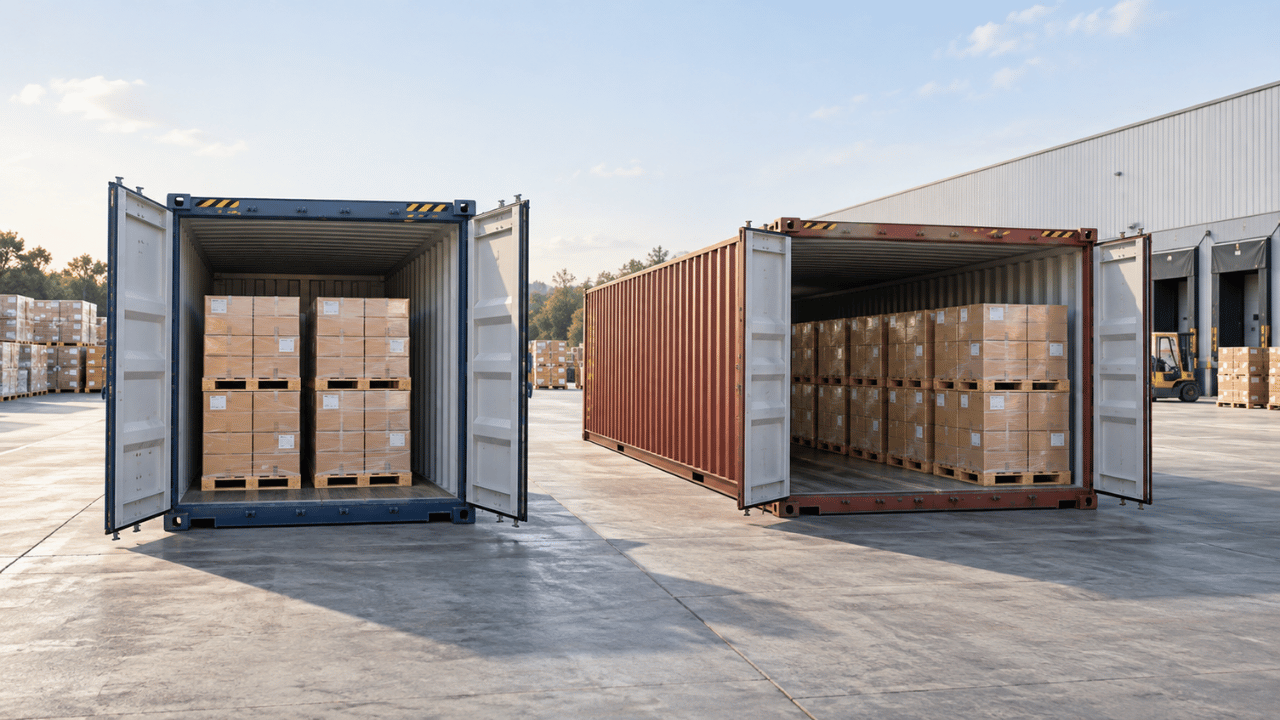
If you are planning storage, freight, or an upcoming shipment, one of the first questions is often: how many pallets fit in a 20ft / 40ft container? The simple answer is that a standard 20-foot container can typically hold about 10 standard U.S. pallets, while a standard 40-foot container can hold about 20 standard U.S. pallets on the floor.
However, the final number depends on pallet dimensions, cargo overhang, loading configuration, and the space needed to secure the load safely.
Approximate data
For planning purposes, a common U.S. pallet measures approximately 48 × 40 inches. When those pallets are arranged efficiently, a 20-foot container generally provides space for around 10 pallets, while a 40-foot container provides approximately 20 pallet positions.
Standard Pallet Estimates
A useful starting point is:
- 20ft container: approximately 10 standard 48 × 40-inch pallets
- 40ft container: approximately 20 standard 48 × 40-inch pallets
- European pallets: the number may be different because their dimensions and loading patterns are different
Think of it like arranging furniture in a room. Two rooms with the same square footage may hold different amounts depending on the dimensions and orientation of each piece. Pallets work the same way.
In practice, container pallet capacity is not determined by container length alone. Cargo that extends past the pallet edge can quickly reduce usable floor space.
What Can Change the Number of Pallets You Can Load?
 Before scheduling transportation or planning warehouse space, confirm the actual dimensions of both the pallet and the loaded product. A common mistake is calculating the layout using only the pallet base while ignoring boxes, packaging, straps, or materials that extend beyond it.
Weight is another important consideration. Even when additional cargo physically fits, the total load still needs to remain within the container’s permitted payload and applicable transportation limits.
Cargo height also matters. Some products can be safely stacked, while fragile, irregular, or heavy materials may require a single layer. Double-stacking can increase the number of palletized units transported, but it does not increase the number of available floor positions.
For larger or high-value shipments, using a pallet-loading calculator or creating a simple floor-layout diagram can help before loading begins. Accurate shipping container dimensions should also be confirmed for the specific container being used, especially when working with oversized cargo or specialized equipment.
Planning a few inches of clearance can be more valuable than trying to force one additional pallet into the container. Proper access, load securing, weight distribution, and safe unloading should remain part of the decision.
Final Thoughts
Container capacity is not simply a matter of counting available floor space. Effective loading requires careful consideration of pallet dimensions, cargo overhang, weight limits, stacking requirements, and safe access for loading and unloading.
Using approximately 10 standard pallets for a 20ft container and 20 for a 40ft container provides a practical planning benchmark, but every shipment should be evaluated individually.
Accurate measurements and a clear loading plan can help maximize available space, improve transportation efficiency, and reduce avoidable complications. Before shipping, confirm the specifications of your container and cargo to ensure the load is practical, secure, and ready for transport.
Frequently Asked Questions
How many standard pallets fit in a 20ft container?
A standard 20-foot container can generally accommodate about 10 U.S. standard pallets measuring 48 × 40 inches in a single floor-level arrangement. The actual number may be lower if the cargo extends beyond the pallet edges or requires additional clearance.
How many pallets fit in a 40ft container?
A standard 40-foot container can typically accommodate about 20 standard 48 × 40-inch pallets at floor level. A 40-foot high-cube container generally has a similar floor footprint, so its main advantage is additional vertical space rather than additional pallet positions. Always confirm pallet size, cargo dimensions, total weight, and loading requirements before finalizing your shipment plan.

About author








Add comment