

The Best Type of HVAC for Shipping Containers
What HVAC Works Best for a Shipping Container?
When people ask about the best HVAC for shipping containers, the short answer is: a mini-split system is usually the best all-around choice. It gives strong cooling and heating, uses less energy than many alternatives, and fits well in the tight space of a container. In simple terms, HVAC means heating, ventilation, and air conditioning. For a shipping container, that means more than just keeping it cool in summer. A container can become extremely hot in direct sun and surprisingly cold at night or in winter. That swing makes climate control less of a luxury and more of a necessity.
In practice, a mini-split is often the top pick because it separates the indoor and outdoor units, so you don’t have to sacrifice much interior space. It also runs quietly, which matters if the container is used as an office, workshop, tiny home, or retail unit. A common mistake is choosing a system based only on price, then discovering it can’t handle the container’s insulation level, sun exposure, or daily use.
Why mini-splits stand out
Mini-splits are efficient, flexible, and easier to install than many traditional systems. They are especially useful if the container has already been modified, because they can be mounted with minimal disruption.
Good fit for real-world use
A container office in a warm climate, for example, needs steady cooling during the day without huge electricity bills. A mini-split can handle that more reliably than a basic window unit, while also looking cleaner and performing better over time.
Other HVAC Options and When They Make Sense
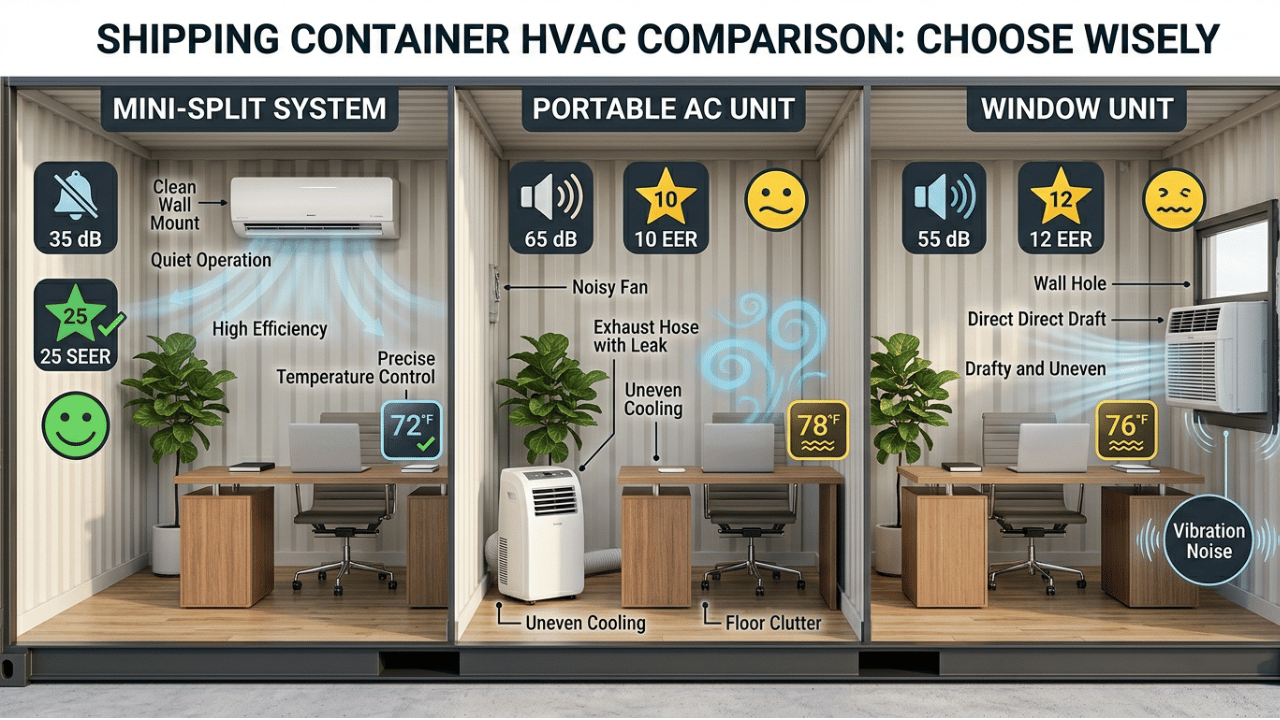 Not every container needs the same setup. The best choice depends on the container’s purpose, budget, insulation, and local weather. A portable air conditioning unit can work for short-term or low-budget projects, especially if the container is used occasionally. However, these units usually struggle with long-term comfort and can be noisy. A window unit is another common option, but it often blocks valuable wall space and may not seal as well.
For colder regions or containers used year-round, a mini-split with heat pump functionality is especially practical. It provides both heating and cooling in one system. That matters because shipping containers can feel like metal ovens in summer and refrigerators in winter if they are not properly managed. When comparing options, think about your daily reality, not just the product brochure. If the container is a home, office, or customer-facing space, comfort and reliability matter more than saving a few hundred dollars upfront. If it’s used for storage only, HVAC may not even be necessary.
How to Choose the Right System
Before buying, check insulation, sun exposure, and the container’s square footage. These factors affect performance more than many people expect. A well-insulated container may need a smaller unit than an uninsulated one. A shaded container will also behave differently from one sitting in full sun all day.
A good tool to use is an HVAC load calculator, which helps estimate the right system size. That simple step can prevent underpowered cooling or wasted energy from an oversized unit. Also, work with a contractor who has real experience with containers, not just standard homes or offices.
FAQ
What size HVAC do I need for a shipping container?
It depends on insulation, climate, and container size. A properly insulated container often needs less capacity than people assume, so load calculation is important.
Can a shipping container use a regular home HVAC system?
Yes, but it is not always the most practical option. In many cases, a mini-split is better because it is easier to fit, more efficient, and better suited to the container’s compact layout.


About author










Add comment