
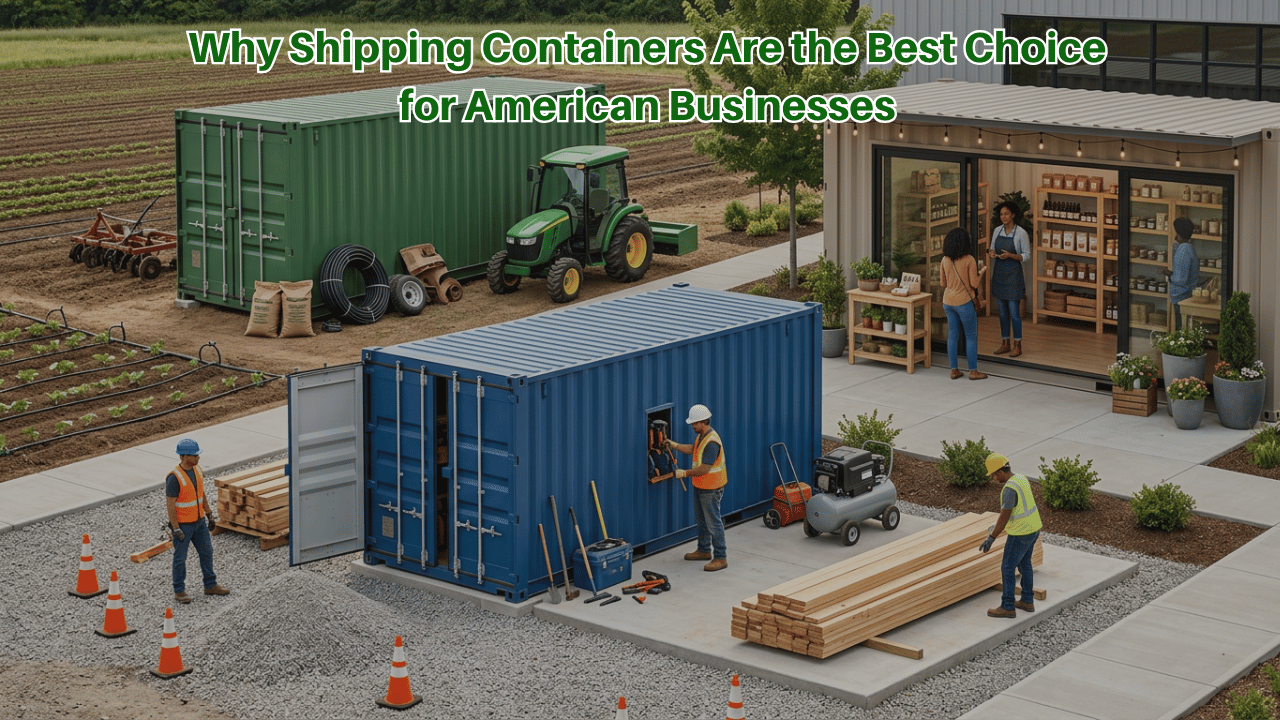
Why Shipping Containers Are the Best Choice for American Businesses
What Makes Shipping Containers So Practical for Business Use?
Shipping containers are large, steel structures originally built to move goods across oceans, highways, and rail lines. In simple terms, they are strong, weather-resistant boxes that can be reused for storage, workspaces, inventory management, equipment protection, and even customer-facing spaces.
For American businesses, the appeal is simple: shipping containers solve real problems without requiring a major construction project. They can be delivered quickly, placed on-site, moved when needed, and modified for different uses. Compared with building a new structure from the ground up, a container is often faster, more flexible, and easier to scale.
In practice, this matters when a business needs space now, not six months from now. A contractor may need secure tool storage at a job site. A farm may need a dry place for feed or seasonal equipment. A retailer may need extra inventory space before the holiday rush. In each case, shipping containers offer a practical, durable solution.
A common mistake is thinking containers are only for storage. Today, companies use them as offices, pop-up shops, workshops, inventory hubs, and mobile command centers. With proper ventilation, insulation, shelving, lighting, and access control, they can become highly functional business assets.
Industry-Specific Benefits for Agriculture, Retail, and Construction
 Agriculture: Protecting Equipment, Feed, and Seasonal Supplies
 Agriculture: Protecting Equipment, Feed, and Seasonal Supplies
Farmers and agribusiness owners deal with changing weather, tight schedules, and expensive equipment. Shipping containers help protect tractors parts, irrigation supplies, seed, fertilizer, animal feed, and tools from rain, wind, pests, and theft.
For example, a vineyard can use a container during harvest season to store crates, pruning tools, and packaging materials near the field. A cattle operation can keep feed supplements and repair tools close to where they are needed. Instead of driving back and forth to a distant barn, teams save time every day.
Containers also support seasonal flexibility. During planting or harvest, they can be placed near active work areas. When the season ends, they can be relocated or repurposed. That makes them especially useful for rural businesses where permanent buildings may be costly or unnecessary.
Retail: Extra Space Without Expensive Expansion
Retail businesses often struggle with inventory overflow, especially during peak seasons. Think of a garden center in spring, a furniture store before a major sale, or a boutique preparing for holiday traffic. Shipping containers can act as secure back-of-house space without forcing the business to rent a larger storefront.
Some retailers also use containers as pop-up shops or temporary sales spaces. With branding, windows, lighting, and climate control, a container can become a compact customer-facing location at festivals, outdoor markets, or high-traffic seasonal areas.
This is where containers can compete with portable storage units while offering a sturdier and more customizable option. Retailers can add shelving, security locks, flooring, and point-of-sale setups to match their needs.
Construction: Secure, Mobile, and Built for Tough Sites
Construction companies benefit from shipping containers because job sites are constantly changing. Tools, generators, safety gear, blueprints, and materials all need to be stored securely. Leaving equipment exposed can lead to theft, weather damage, or costly delays.
A container gives crews a reliable on-site base. It can serve as a tool room, materials hub, break area, or temporary office. Larger projects may use multiple containers for different purposes, such as one for equipment and another for administrative work.
Containers also fit naturally into construction workflows because they can move from site to site. Instead of rebuilding temporary storage at every project, a company can transport the same container wherever the next job begins. Some firms even convert containers into modular buildings for offices, training rooms, or field operations.
How to Choose the Right Container for Your Business
Before buying or renting a shipping container, start with the actual business problem you need to solve. Are you protecting inventory? Creating workspace? Reducing travel time across a large property? The right choice depends on use, location, and duration.
Here are practical tips to guide the decision:
- Choose the right size based on what you need to store or operate inside, not just the available space on-site.
- Inspect the condition carefully, especially the doors, roof, flooring, and seals.
- Consider modifications such as vents, shelving, insulation, lighting, ramps, or security systems.
- Check local zoning rules, permits, and placement requirements before delivery.
- Plan for access, including delivery truck clearance and daily employee use.
It is also smart to think about climate. In hot states like Texas, Arizona, or Florida, ventilation and insulation may be important. In colder regions, businesses may need weatherproofing or heating depending on the use. Tools like site layout software, security cameras, and inventory tracking systems can make container use even more efficient.
FAQ
Are shipping containers cost-effective for small businesses?
Yes. For many small businesses, shipping containers are cost-effective because they reduce the need for permanent construction or larger leased space. They are especially useful when a company needs secure storage, temporary workspace, or seasonal flexibility.
Can shipping containers be customized for business operations?
Absolutely. Shipping containers can be modified with doors, windows, insulation, shelving, electricity, HVAC, flooring, and security features. The key is to match the modifications to the business need rather than overbuilding from the start.


About author






Add comment